
How to Create a Pitch Deck for a Digital Agency
Learn how to create an agency pitch deck for digital agencies, including the essential slides, client presentation structure, case studies, pricing, and design tips.

A digital agency pitch deck is more than a collection of slides about your company. When you are competing for a new client, your presentation needs to show that you understand the client's problem, have a clear strategy, and can turn that strategy into measurable results.
Unlike a startup pitch deck that is usually built for investors, an agency pitch deck is designed around a potential client's business, goals, challenges, and expectations.
A strong client pitch deck should answer one important question throughout the presentation:
Why should this client trust your agency with this project?
Whether you are pitching web development, branding, digital marketing, social media, UX/UI design, or a full digital transformation project, the structure of your presentation can make a significant difference.
In this guide, we'll explain how to create a pitch deck for a digital agency, what slides to include, how to structure your story, and how to turn your agency presentation into a more effective sales tool.
What Is an Agency Pitch Deck?#
An agency pitch deck is a presentation used by a digital agency to introduce its capabilities, understand a client's needs, present a proposed strategy, and explain why the agency is suitable for the project.
It can be used during:
- New business pitches
- Client presentations
- Digital marketing proposals
- Website redesign proposals
- Branding projects
- UX/UI design projects
- Software development proposals
- Social media campaigns
- Retainer proposals
- Partnership presentations
A typical agency pitch deck may include:
- Cover
- Client challenge
- Opportunity
- Agency introduction
- Relevant expertise
- Proposed strategy
- Services and deliverables
- Process
- Case studies
- Timeline
- Team
- Pricing or investment
- Next steps
The exact structure depends on the project.
The important part is that your agency presentation should not feel like a company brochure.
It should feel like a solution to the client's specific problem.
Agency Pitch Deck vs. Startup Pitch Deck#
One of the easiest mistakes is using a startup pitch deck structure for an agency client presentation.
The two presentations have different goals.
A startup pitch deck is generally focused on:
- Problem
- Solution
- Product
- Market
- Business model
- Traction
- Competition
- Financials
- Funding
An agency pitch deck is more focused on:
- Client challenge
- Business objectives
- Proposed solution
- Strategy
- Deliverables
- Relevant experience
- Case studies
- Process
- Timeline
- Investment
- Next steps
The difference is simple:
A startup pitch deck sells a business opportunity. An agency pitch deck sells a solution and the agency's ability to deliver it.
That distinction should influence every slide.
How to Create a Digital Agency Pitch Deck#
1. Start With the Client's Problem#
Don't start your presentation with 10 slides about your agency.
Start with the client.
Before introducing your team, explain what you understand about their situation.
For example, instead of:
"We are a full-service digital agency with 10 years of experience."
Try starting with:
"Your current website generates traffic, but the conversion journey between landing page and inquiry remains fragmented."
The second statement immediately demonstrates that you understand the client's business.
A strong problem slide should address:
- What is the client struggling with?
- Why is the problem happening?
- What impact does it have?
- What opportunity is being missed?
- What needs to change?
This creates context for everything that follows.
2. Define the Business Opportunity#
Once you establish the problem, explain what could happen if it is solved.
This is where your agency presentation moves from diagnosis to opportunity.
Current Situation#
- High website traffic
- Low conversion rate
- Inconsistent landing pages
- Limited analytics visibility
Opportunity#
- Improve conversion paths
- Simplify user journeys
- Create campaign-specific landing pages
- Build a stronger measurement framework
The goal is not to make unrealistic promises.
Instead, show the client that you understand the relationship between the problem and the potential business outcome.
3. Introduce Your Agency Briefly#
Now it makes sense to introduce your agency.
Keep this section concise.
Include information such as:
- Agency name
- Core expertise
- Years of experience
- Industries served
- Geographic coverage
- Selected clients
- Key capabilities
Avoid turning this section into an autobiography.
The client is interested in your agency because they have a problem to solve.
Your credentials should therefore support the argument:
"We are relevant to your problem."
Not:
"Here is everything we have ever done."
4. Explain Your Strategic Approach#
This is one of the most important sections of an agency pitch deck.
Don't jump directly from "About Us" to "Our Services."
Explain how you think about the client's problem.
Discover#
Understand the business, audience, competitors, and existing digital ecosystem.
Define#
Identify the highest-impact problems and establish measurable objectives.
Design#
Develop the user experience, content structure, campaign concept, or digital solution.
Build#
Implement the agreed solution across the required platforms.
Measure#
Track performance and continuously improve based on data.
This gives the client a clear picture of how the agency works.
It also makes your presentation feel more strategic rather than simply service-oriented.
5. Present Your Proposed Solution#
Now explain what you actually recommend.
This section should connect directly to the problems identified earlier.
Client Challenge#
Low conversion from paid traffic.
Proposed Solution#
A new campaign landing-page system with:
- Dedicated landing pages
- Improved information hierarchy
- Stronger calls to action
- Conversion tracking
- A/B testing framework
This is much more persuasive than simply listing:
- Web Design
- UI/UX
- Development
- Digital Marketing
The client needs to understand what you will do and why it matters.
6. Define the Scope and Deliverables#
Once the strategy is clear, explain exactly what the client will receive.
Phase
Deliverables
Discovery
Research, audit, stakeholder interviews
Strategy
Customer journey, positioning, digital strategy
Design
Wireframes, UI design, design system
Development
Frontend, backend, CMS integration
Launch
QA, deployment, analytics
Optimization
Monitoring, testing, reporting
The goal is to remove ambiguity.
A client should be able to look at your client pitch deck and understand:
What am I actually paying this agency to produce?
7. Show Your Process#
Clients want to know what working with your agency will actually feel like.
Use a simple process diagram rather than several paragraphs of explanation.
Discovery → Strategy → Design → Development → Launch → Optimization
You can then explain what happens at each stage.
A process slide is particularly useful for complex digital projects because it gives the client a clear expectation of how the project will move forward.
8. Use Relevant Case Studies#
Case studies are one of the most important parts of an agency presentation.
But don't simply show a gallery of logos.
Instead, structure each case study around:
Challenge#
What problem did the client have?
Approach#
What did your agency do?
Solution#
What did you actually build or implement?
Result#
What changed?
Whenever possible, include actual metrics.
Examples include:
- Conversion rate
- Revenue
- Leads generated
- Traffic growth
- Engagement
- Cost per acquisition
- Retention
- Project delivery time
Specific evidence is generally more useful than generic statements such as "We delivered outstanding results."
9. Show Why Your Experience Is Relevant#
Don't include every project your agency has ever completed.
Choose projects that resemble the client's situation.
For example, if you are pitching an e-commerce redesign, prioritize:
- E-commerce projects
- Conversion optimization
- UX/UI work
- Product discovery
- Checkout optimization
- Analytics implementations
A small number of highly relevant case studies can communicate more than a huge portfolio.
The question your client is really asking is:
"Have you solved something similar before?"
Your presentation should make that answer easy to find.
10. Introduce the Team#
The team slide should explain who will actually work on the project.
Depending on the project, this might include:
- Strategy Lead
- Account Manager
- UX Designer
- UI Designer
- Developer
- Project Manager
- Digital Marketing Specialist
- Content Strategist
- Data Analyst
Don't just list job titles.
Explain each person's role in the project.
This is particularly important when the agency's sales team is different from the team that will actually deliver the work.
11. Present the Timeline#
A timeline helps transform an abstract proposal into a concrete project.
Week 1–2#
Discovery & Strategy
Week 3–4#
UX & Information Architecture
Week 5–7#
UI Design
Week 8–12#
Development
Week 13#
QA & Launch
The exact timeline should depend on project scope.
Avoid promising an aggressive timeline simply because it looks attractive in a pitch.
A realistic timeline builds more trust than an unrealistic one.
12. Explain the Investment#
Pricing is often one of the most sensitive sections of an agency pitch deck.
Instead of presenting a single unexplained number, provide context.
- Strategy: $X
- Design: $X
- Development: $X
- Launch & Optimization: $X
Total Project Investment: $X
For larger projects, you can also present different engagement models:
- Fixed project
- Monthly retainer
- Phase-based engagement
- Discovery first
- Strategy + implementation
The goal is to make the investment understandable rather than simply putting a price on one slide.
13. End With Clear Next Steps#
Your final slide should make it obvious what happens after the presentation.
Next Steps#
- Confirm project scope
- Finalize timeline
- Approve proposal
- Schedule kickoff
- Begin discovery
Include your contact information and a clear call to action.
Don't finish with a generic:
Thank You.
Use the final slide to move the conversation forward.
Recommended Agency Pitch Deck Structure#
If you need a practical starting point, use this 12-slide agency pitch deck structure:
1. Cover#
Agency name + project name + client name.
2. The Challenge#
Show that you understand the client's current situation.
3. The Opportunity#
Explain what could improve.
4. About the Agency#
Brief introduction and relevant expertise.
5. Strategic Approach#
Explain how you will solve the problem.
6. Proposed Solution#
Present the recommended strategy.
7. Scope & Deliverables#
Show exactly what the client receives.
8. Relevant Case Studies#
Demonstrate similar experience and results.
9. Team & Process#
Show who will deliver the project and how.
10. Timeline#
Explain the expected project phases.
11. Investment#
Present the proposed commercial structure.
12. Next Steps#
Make the path forward clear.
This structure can be shortened for smaller projects or expanded for complex enterprise proposals.
How to Design an Agency Presentation#
The content is important, but presentation design also influences how easily clients understand your proposal.
A professional agency presentation should have a consistent visual system.
Use:
- Consistent typography
- Clear slide hierarchy
- Strong headlines
- Plenty of whitespace
- Consistent spacing
- Simple charts
- Relevant imagery
- Brand colors
- Consistent layouts
Avoid filling every slide with information.
A good slide should have one primary message.
For example:
Weak headline:
Our Digital Marketing Services
Stronger headline:
Turning Paid Traffic Into Measurable Customer Acquisition
The second headline gives the audience context before they even read the body copy.
Common Digital Agency Pitch Deck Mistakes#
1. Talking Too Much About the Agency#
A common mistake is spending the first five slides explaining the agency's history.
Your credentials matter, but they should support the client's decision rather than dominate the presentation.
2. Listing Services Without Strategy#
A list of services doesn't explain how those services solve the client's problem.
Connect every service to an objective.
3. Showing Too Many Portfolio Pieces#
Twenty portfolio screenshots can become visual noise.
Show fewer projects with stronger context.
4. Using Generic Case Studies#
A case study about a completely unrelated project may not help your pitch.
Prioritize relevance.
5. Making Unsupported Claims#
Avoid statements such as:
"We will increase your revenue by 300%."
unless you have a credible basis for the claim.
Instead, explain your methodology, assumptions, and measurable objectives.
6. Making the Deck Too Long#
A pitch deck is not your entire proposal document.
If a piece of information doesn't help the client understand your strategy, credibility, scope, or investment, consider removing it.
How to Make Your Client Pitch Deck More Persuasive#
A useful way to review your presentation is to ask five questions:
1. Do We Understand the Client's Problem?#
The client should feel that you've done your homework.
2. Is the Proposed Solution Easy to Understand?#
Avoid unnecessary jargon.
3. Can We Prove That We Can Deliver?#
Use relevant case studies, experience, and evidence.
4. Is the Scope Clear?#
The client should know what is included.
5. Is the Next Step Obvious?#
Don't leave the client wondering what happens after the presentation.
If all five questions are answered clearly, the deck becomes much more useful as a sales tool.
Use a Pitch Deck Template to Build Faster#
Creating every agency presentation from a blank PowerPoint file can consume a significant amount of time.
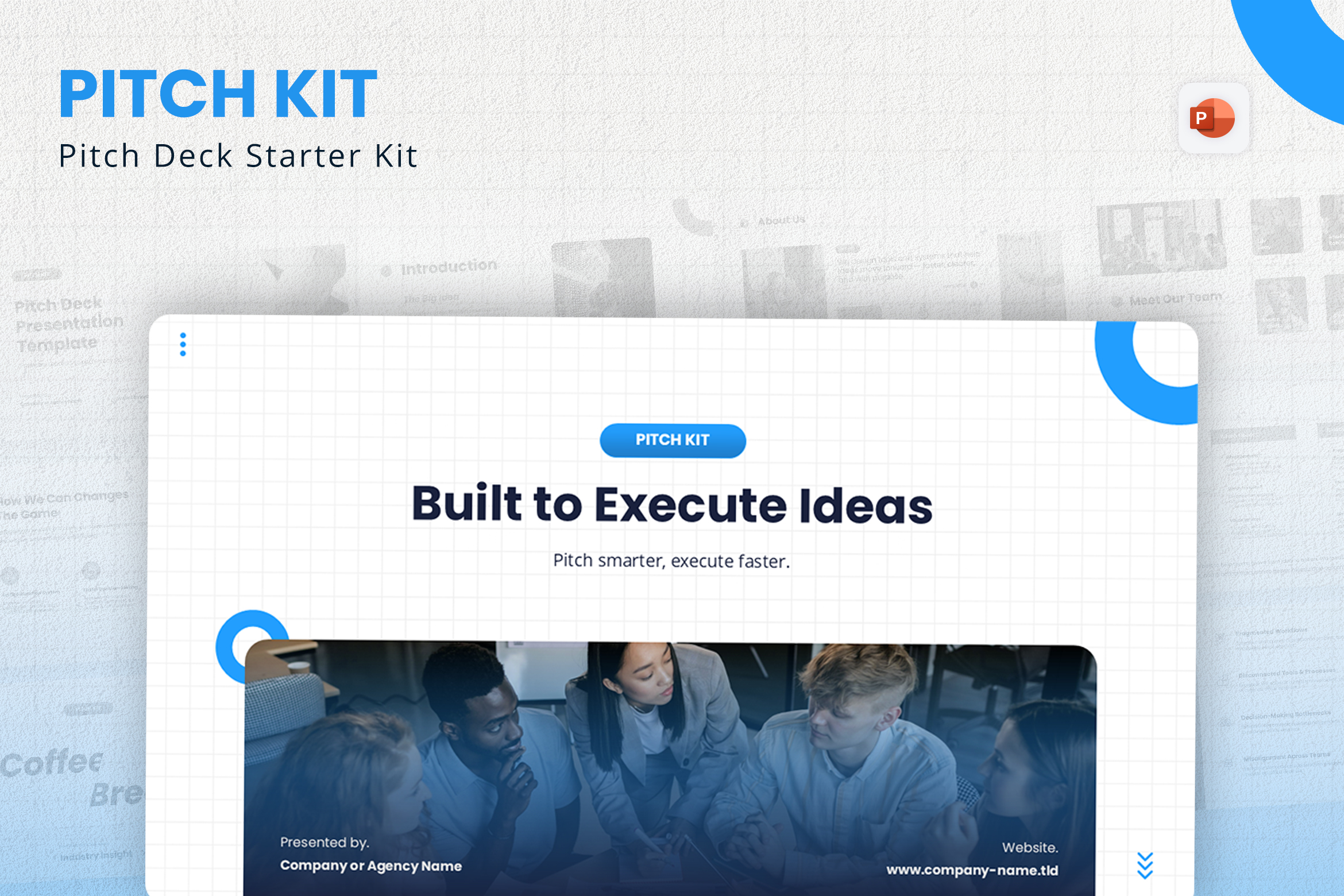
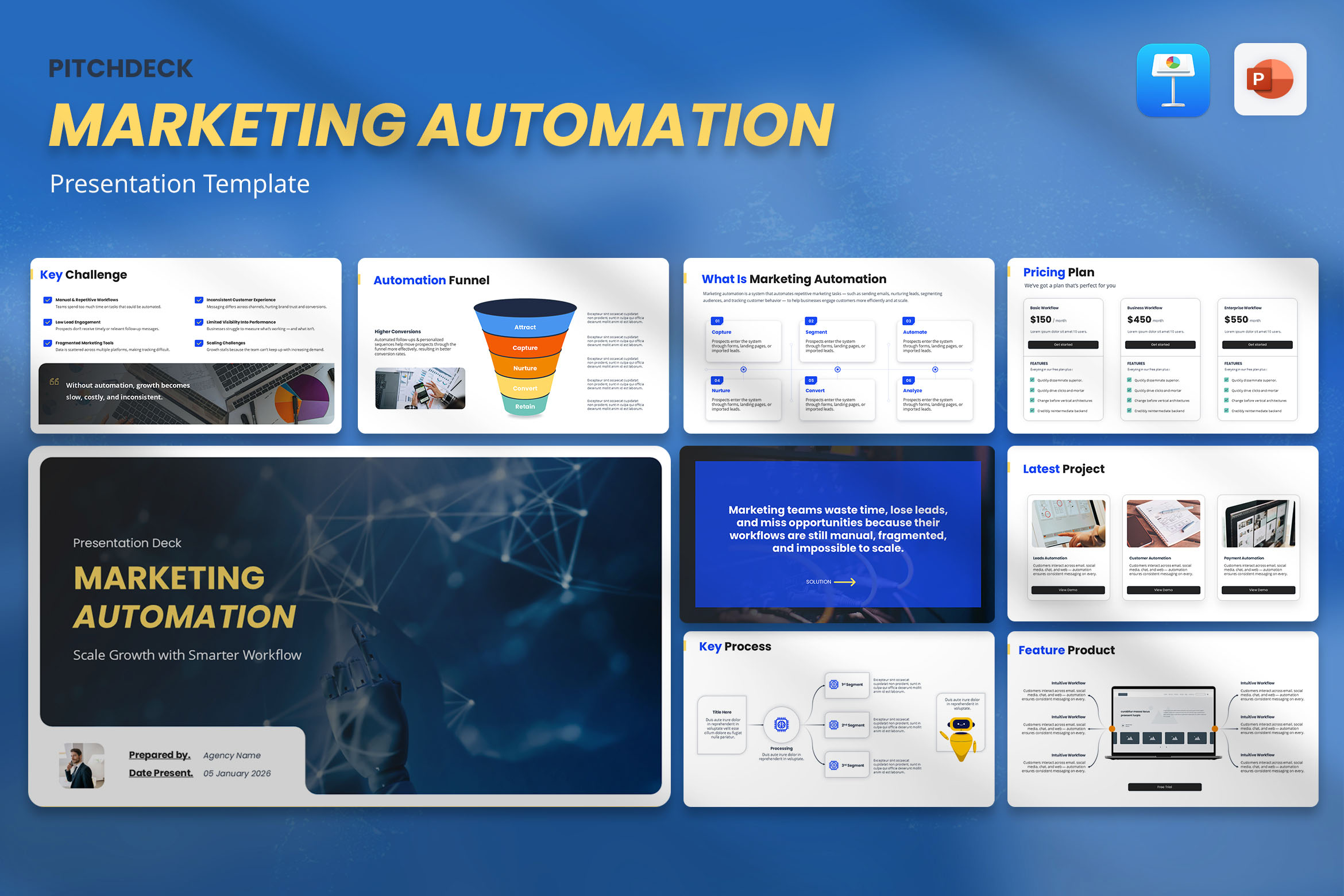
A professional pitch deck template gives you a starting visual system, allowing your team to focus more on the strategy and content.
Appiqa's pitch deck collection includes presentation templates that can be adapted for startup pitches, business proposals, agency presentations, and client-facing decks.
For example, DIGIT – Startup Business Fundraising Presentation Template can provide a structured foundation for presentations that need strong business storytelling and data-driven slides.
You can also use PitchUp – Professional PowerPoint and Keynote Pitch Deck Template when you need a flexible presentation system for both PowerPoint and Keynote.